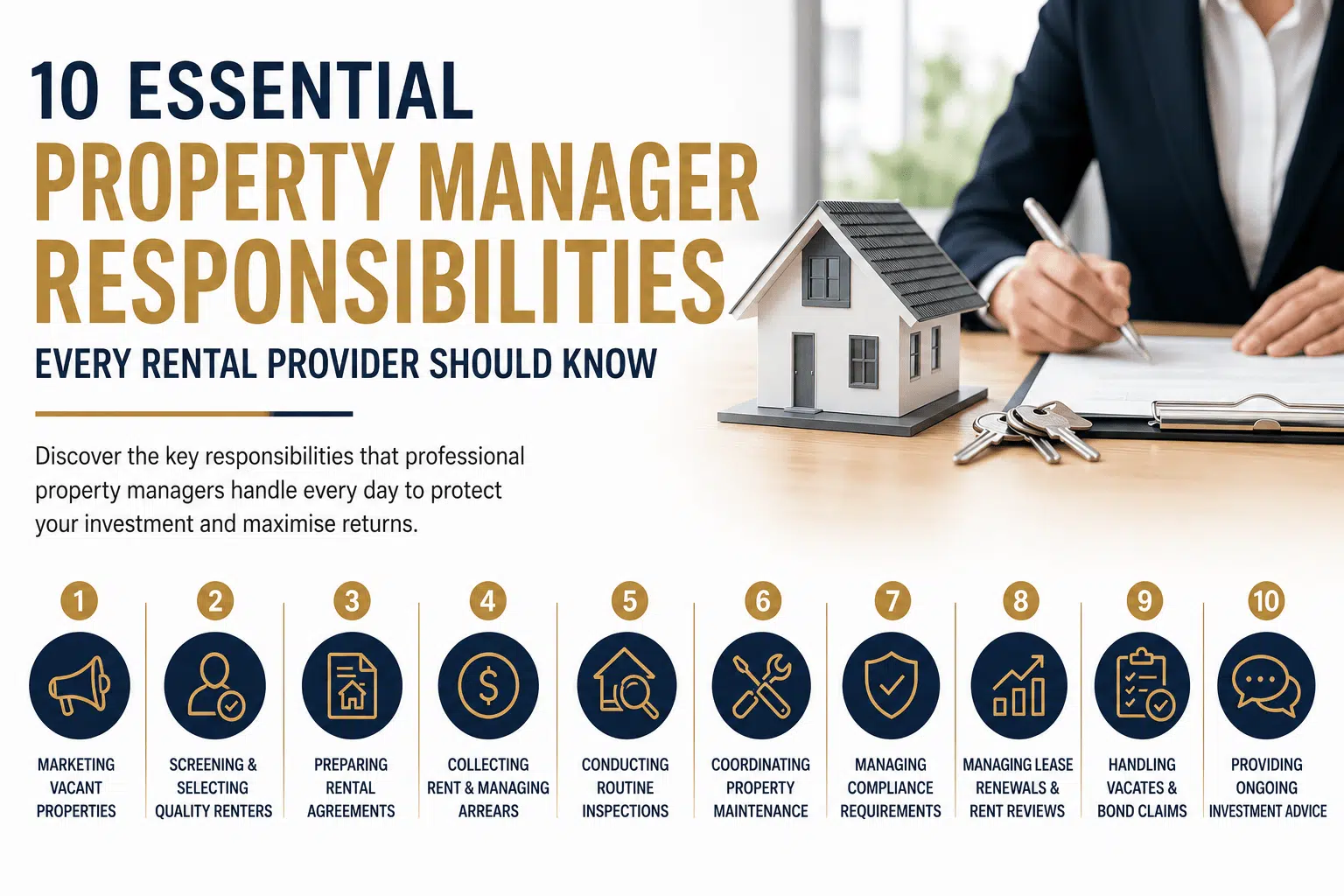
Property Manager Responsibilities: 10 Proven Ways Professionals Maximise Returns
What Does a Property Manager Actually Do? Understanding Property Manager Responsibilities
Many rental providers understand that a property manager collects rent and communicates with renters, but the reality is that professional property management involves much more than most people realise.
From advertising vacant properties and screening prospective renters to coordinating maintenance and ensuring compliance with Victorian rental legislation, property managers play a critical role in protecting investment properties and maximising returns.
Understanding property manager responsibilities can help rental providers appreciate the value a professional property manager brings to their investment.
Why Property Management Matters
Owning an investment property can be rewarding, but it also comes with ongoing responsibilities. Rental providers must comply with legislation, manage renters, coordinate repairs, respond to maintenance requests and ensure the property remains financially viable.
Professional property managers help remove the stress and time commitment associated with property ownership while helping rental providers achieve stronger investment outcomes.
1. Marketing Vacant Properties
One of the most important property manager responsibilities is attracting suitable renters when a property becomes vacant.
This process typically includes:
- Professional property advertising
- Listing properties on major rental websites
- Managing renter enquiries
- Conducting open inspections
- Providing rental market advice
- Recommending competitive rental pricing
Effective marketing helps reduce vacancy periods and ensures properties reach the widest possible audience.
2. Screening and Selecting Quality Renters
Finding the right renter is one of the most important decisions during any tenancy.
Professional property managers conduct detailed screening, including:
- Rental history checks
- Employment verification
- Income assessment
- Reference checks
- Identity verification
- Database searches where permitted
Quality renter selection can significantly reduce the likelihood of arrears, property damage and tenancy disputes.
3. Preparing Rental Agreements
Property managers are responsible for ensuring rental agreements are prepared correctly and comply with current legislation.
This includes:
- Preparing lease documentation
- Providing required disclosures
- Explaining tenancy obligations
- Coordinating agreement execution
- Managing bond lodgement processes
Accurate documentation helps protect both rental providers and renters throughout the tenancy.
4. Collecting Rent and Managing Arrears
Rent collection is one of the most visible property manager responsibilities.
A professional property manager:
- Monitors rental payments
- Follows up arrears promptly
- Issues notices when required
- Maintains accurate records
- Provides financial reporting
Proactive arrears management helps protect cash flow and reduces the risk of significant rental debt accumulating.
5. Conducting Routine Property Inspections
Routine inspections help ensure the property is being maintained appropriately and allow potential issues to be identified early.
Inspection responsibilities typically include:
- Assessing property condition
- Identifying maintenance concerns
- Monitoring lease compliance
- Preparing detailed reports
- Recommending preventative maintenance
Regular inspections help protect the long-term value of investment properties.
6. Coordinating Property Maintenance
Property maintenance is often one of the most time-consuming aspects of managing an investment property.
Professional property managers coordinate:
- Emergency repairs
- Routine maintenance
- Contractor attendance
- Maintenance quotations
- Work order management
- Follow-up inspections
By using trusted trades and established systems, property managers help ensure maintenance issues are addressed efficiently.
7. Managing Compliance Requirements
Legislation affecting rental properties continues to evolve, making compliance increasingly important.
Property manager responsibilities include helping rental providers understand obligations relating to:
- Rental minimum standards
- Smoke alarms
- Safety requirements
- Compliance documentation
- Entry notices
- Tenancy legislation
Staying informed about regulatory changes helps reduce risk and improve property performance.
8. Managing Lease Renewals and Rent Reviews
At the end of a fixed-term tenancy, property managers assist with:
- Lease renewal discussions
- Rent reviews
- Market assessments
- Negotiations with renters
- Updated documentation
Regular rent reviews help ensure rental income remains aligned with current market conditions.
9. Handling Vacates and Bond Claims
When a tenancy ends, property managers coordinate the transition process.
This includes:
- Exit inspections
- Property condition assessments
- Bond claim administration
- Maintenance coordination
- Re-leasing preparation
A structured vacate process helps minimise disputes and reduce vacancy periods.
10. Providing Ongoing Investment Advice
Many experienced property managers provide valuable advice beyond day-to-day tenancy management.
This may include:
- Rental market updates
- Property improvement recommendations
- Vacancy reduction strategies
- Investment performance reviews
- Long-term property planning
A proactive property manager can become a valuable partner in helping rental providers achieve their investment goals.
The Hidden Value of Professional Property Management
Many rental providers focus primarily on management fees when comparing agencies. However, the true value of professional property management often comes from:
- Reduced vacancies
- Better renter selection
- Faster maintenance response times
- Improved compliance
- Higher renter retention
- Reduced stress
- Better long-term investment performance
A quality property manager can often generate value that far exceeds the cost of management fees.
Frequently Asked Questions
What are the main property manager responsibilities?
Property manager responsibilities include advertising properties, screening renters, collecting rent, conducting inspections, coordinating maintenance, managing compliance requirements and handling lease renewals and vacates.
Do property managers handle maintenance?
Yes. Property managers coordinate maintenance requests, obtain quotations, organise trades and monitor repairs to ensure issues are addressed efficiently.
How often do property managers inspect rental properties?
Inspection frequency varies depending on legislation and tenancy arrangements, but routine inspections are typically conducted regularly throughout the tenancy.
Can a property manager help increase rental returns?
Yes. Professional property managers can help maximise rental returns through effective marketing, quality renter selection, rent reviews, reduced vacancies and proactive property management.
Is professional property management worth the cost?
For many rental providers, professional property management provides significant value through reduced stress, improved compliance, better renter management and stronger long-term investment outcomes.
Final Thoughts
Understanding property manager responsibilities highlights the significant role professional property managers play in protecting investment properties and supporting rental providers.
From marketing and renter selection through to inspections, maintenance and compliance, a professional property manager provides expertise and systems designed to maximise returns while reducing the time and stress associated with property ownership.
If you’re considering professional property management, partnering with an experienced agency can help you protect your investment and achieve stronger long-term results.
Links to:


