Routine Inspections Explained
Routine Inspections Explained
Why Routine Inspections Are Essential for Protecting Your Investment Property
Routine inspections are one of the most important aspects of professional property management. They help protect your investment, identify maintenance issues early and ensure your property continues to be well cared for throughout the tenancy.
Many rental providers wonder what actually happens during a routine inspection, how often they should be completed and whether they genuinely add value. The answer is simple—regular inspections provide peace of mind while helping prevent small issues from becoming costly repairs.
At Verdi Property Management, routine inspections are about much more than taking photos. They provide an opportunity to assess the overall condition of your property, identify maintenance requirements and help protect the long-term value of your investment.
What Is a Routine Inspection?
A routine inspection is a scheduled visit to your rental property conducted during the tenancy to assess its overall condition.
The purpose is not to invade the renter’s privacy but to ensure the property is being reasonably maintained, identify any maintenance concerns and confirm the property continues to comply with Victorian rental standards.
Routine inspections also allow your property manager to keep you informed about your investment and recommend preventative maintenance where appropriate.
Why Are Routine Inspections Important?
Routine inspections benefit both rental providers and renters.
For rental providers, inspections help:
- Protect the property’s condition
- Identify maintenance issues early
- Reduce long-term repair costs
- Monitor wear and tear
- Ensure lease obligations are being met
- Plan future maintenance and improvements
For renters, inspections provide an opportunity to raise maintenance concerns that may not have been previously reported.
What Does a Property Manager Look For?
During a routine inspection, your property manager assesses the property’s overall presentation rather than looking for minor housekeeping issues.
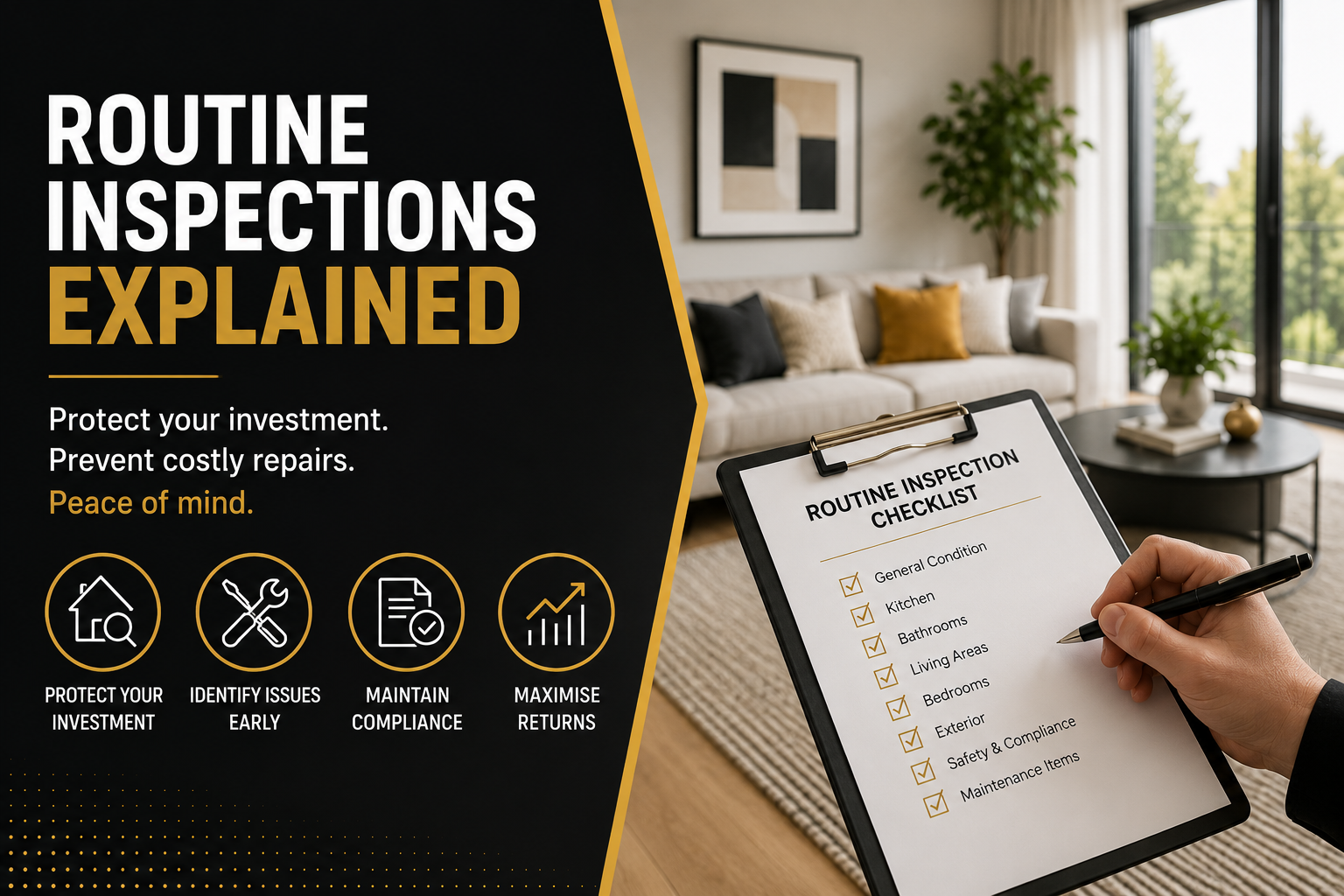
Areas commonly inspected include:
General Property Condition
- Internal walls and ceilings
- Flooring
- Doors and windows
- Fixtures and fittings
Kitchen
- Cabinet condition
- Benchtops
- Appliances
- Plumbing leaks
- Exhaust fans
Bathrooms
- Water damage
- Silicone and grout condition
- Ventilation
- Plumbing fixtures
Living Areas
- General presentation
- Smoke alarm locations
- Heating and cooling systems
- Signs of maintenance issues
Bedrooms
- Walls and flooring
- Windows
- General condition
Exterior
- Gardens and lawns
- Fencing
- Gutters (where visible)
- External maintenance
- General cleanliness
Routine Inspections Help Detect Problems Early
One of the greatest benefits of routine inspections is identifying issues before they become expensive repairs.
For example:
- Small roof leaks
- Water damage
- Plumbing leaks
- Mould growth
- Damaged seals
- Broken exhaust fans
- Deteriorating fencing
- Pest activity
Addressing these issues early can save thousands of dollars in future repair costs.
Routine Inspections Are About Preventative Maintenance
Professional property management focuses on prevention rather than reaction.
Routine inspections allow property managers to recommend maintenance before problems worsen.
Examples include:
- Replacing deteriorating silicone before water damage occurs
- Servicing heating and cooling systems
- Repairing leaking taps
- Clearing gutters
- Trimming overgrown vegetation
Preventative maintenance protects both the property and your long-term investment.
How Often Should Routine Inspections Be Completed?
The frequency of routine inspections is governed by Victorian rental legislation.
Most professionally managed investment properties receive regular inspections throughout the tenancy, providing rental providers with ongoing updates while respecting renters’ rights and privacy.
What Happens After the Inspection?
Following the inspection, your property manager should provide a detailed inspection report.
A quality report typically includes:
- Professional photographs
- Property condition summary
- Recommended maintenance
- Items requiring monitoring
- Suggested improvements
- General comments
This allows rental providers to understand exactly how their property is being maintained without needing to attend personally.
Common Misconceptions About Routine Inspections
“Routine inspections are only looking for damage.”
Not at all.
A large part of the inspection involves identifying maintenance that protects your investment.
“A clean house means everything is fine.”
Presentation is only one part of the inspection.
Professional property managers also look for hidden maintenance concerns that may not be immediately obvious.
“Routine inspections create conflict with renters.”
When conducted professionally and respectfully, routine inspections help build positive communication and ensure maintenance issues are addressed promptly.
Why Professional Property Management Makes a Difference
Routine inspections are only valuable when they are thorough and followed by proactive action.
At Verdi Property Management, inspections don’t end when we leave the property.
We:
- Prepare detailed inspection reports
- Recommend preventative maintenance
- Obtain quotes where required
- Coordinate repairs
- Keep rental providers informed
- Monitor recurring maintenance issues
Our goal is to protect your investment while helping maintain positive long-term tenancies.
Frequently Asked Questions
How Long Does a Routine Inspection Take?
Most routine inspections take between 15 and 30 minutes, depending on the size and condition of the property.
Do Rental Providers Need to Attend?
No. Most rental providers rely on their property manager to complete the inspection and provide a detailed report with photographs and recommendations.
Can Routine Inspections Prevent Expensive Repairs?
Yes. Identifying maintenance issues early is one of the most effective ways to reduce long-term repair costs and protect the value of your investment property.
Protect Your Investment with Professional Routine Inspections
Routine inspections are an essential part of effective property management. They provide valuable insights into your property’s condition, help identify maintenance issues early and give rental providers confidence that their investment is being professionally managed.
At Verdi Property Management, we complete thorough routine inspections, provide comprehensive reports and proactively manage maintenance to help protect your investment for years to come.
Contact Verdi Property Management today to learn how our proactive property management services can help protect your investment property.
Related Resources
Continue learning with our helpful guides for Geelong rental providers:
- Property Management Geelong – Discover how proactive property management can maximise returns and protect your investment.
- Rental Appraisal Geelong – Find out how much rent your property could achieve in today’s market.
- Rent Reviews Geelong – Learn when and how rental reviews should be completed.
- Property Management Fees – Understand what to expect from professional property management services.
- Property Insurance Guide – Learn how landlord insurance can help protect your investment property.
- Rental Property Depreciation Guide – Discover how depreciation may improve your investment property’s after-tax return.


